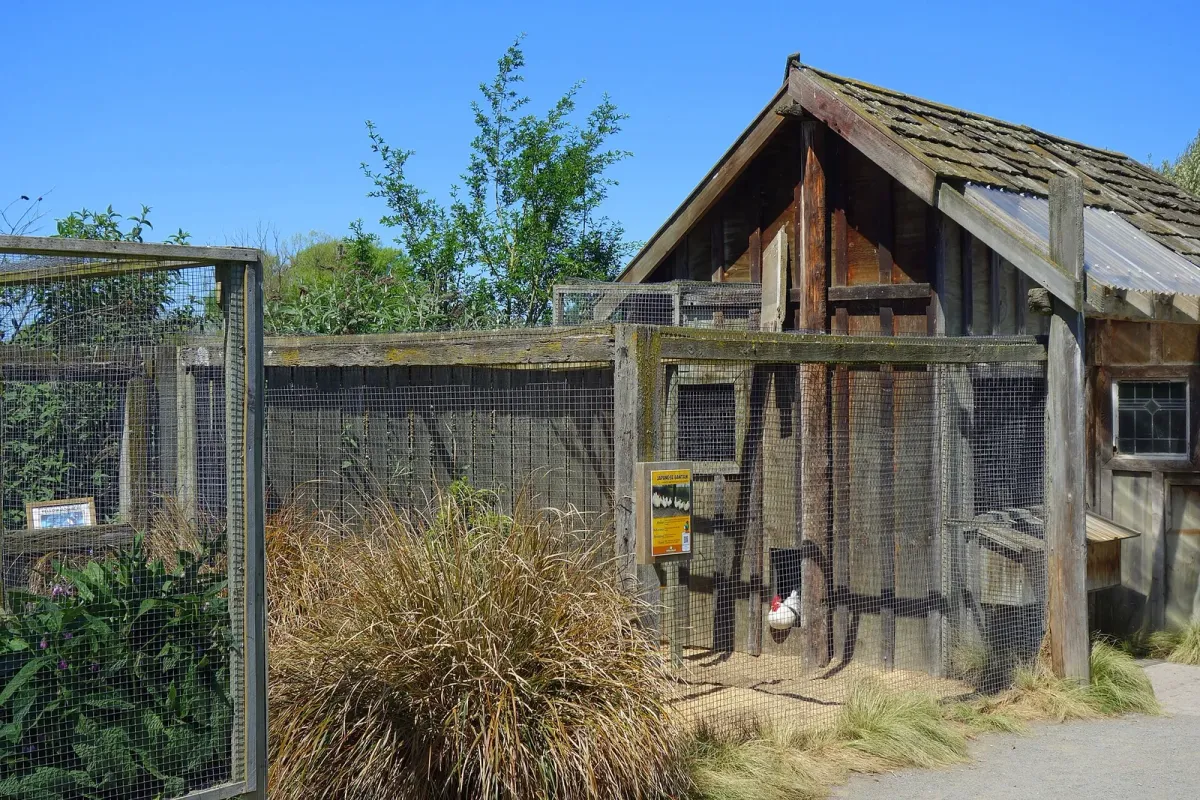
Chicken Pen and Coop: Buyer's Checklist
A buyer's checklist for a chicken pen and coop, covering space, ventilation, predators, and nesting, with figures drawn from university extension guides.
Buy the housing as a pair, not as two afterthoughts
A chicken pen and coop is one system. The coop is where the birds sleep, lay, and get out of weather. The pen, or run, is where they move, scratch, and spend the day if they are not on pasture. A pretty coop with a tiny, flimsy run will make a crowded, muddy week. A big run with a drafty, unsecured house will make a short-lived flock.
This is a buyer’s checklist, not a veterinary guide and not a construction manual for every climate. Local ordinances, homeowners’ association rules, and neighbor lines matter as much as the hardware. Check those first, including how many birds you may keep and whether a rooster is allowed.
Two university extension sources are useful before you spend money. The University of Delaware Cooperative Extension recommends at least 2 to 3 square feet per chicken inside the coop and an additional 8 to 10 square feet per chicken in the outdoor run, plus ventilation without drafts, predator-proof latches and mesh, and nesting boxes at one box per 3 to 4 hens. That advice is in Delaware Extension’s chicken housing fact sheet. The University of Maryland Extension publishes a more detailed space table and notes on ventilation, nest height, roosts, and hardware cloth, in Maryland Extension: Housing Requirements.
If a listing does not let you calculate space for the number of birds you actually want, keep shopping.
Space, layout, and how the pen connects to the coop
Count the birds first, then the square feet, then the product photos. Maryland’s table, citing Clauer, 2009, gives minimums that rise with the size of the bird: bantams at 1 square foot inside and 4 in an outside run; laying hens at 1.5 inside and 8 in the run; large chickens at 2 inside and 10 in the run. Delaware’s slightly more generous 2 to 3 inside and 8 to 10 in the run is a comfortable planning range for a mixed backyard flock. When in doubt, give more room, not less, and do not use the smallest number in a table as a target for a breed that is clearly large.
The pen should attach so you can close birds into the coop at night without a wrestling match. A pop door you can operate from outside the run is worth more than a decorative window. You want to walk into the run to refill water without letting the whole flock out into the yard unless that is the plan.
Look at the floor of both spaces. Dirt runs become mud. A deep, wet depression against the coop wall is how water ends up in the bedding. A slightly raised coop floor, a roof overhang, and good drainage around the pen will save you work. Maryland notes that housing should sit in a well-drained area, with access to water and electricity if you need them, and that the building should be tight, well ventilated, and insulated enough to keep birds comfortable.
A movable pen, sometimes called a tractor, is a reasonable choice if you want to shift birds across grass. It still needs predator-proof sides and a secure night house. “Bottomless” only works if the hardware around the bottom is tight and you move it often enough that the ground does not turn to bare mud.
Predators, mesh, and latches
The run is not a suggestion to a raccoon. Weak chicken wire, decorative hex netting, and a hook latch a child could open will not do. Maryland recommends ½-inch mesh hardware cloth over windows to keep out wild birds, rodents, and varmints. Use a similar standard on any opening a paw or a jaw could work at, including vents and the gap at the base of the pen. If the run has an open top, you will need a cover, or you are accepting aerial and climbing risk.
Latches should need two motions, or a carabiner, or a similar step a raccoon cannot do in the dark. Hinges and doors should not leave a gap you can slide a hand through. If you can lift a corner of the run off the ground, so can something that wants to dig. An apron of buried mesh, or a solid base, is part of the purchase, even if the catalog treats it as optional.
Do not leave feed in an open run overnight if you can help it. Feed draws pests, and pests draw larger visitors. This is husbandry, not a scare story.
Ventilation, nests, and the interior you will clean
A coop can be too tight. Moisture and ammonia need a way out, without a wind blowing directly on the roost. Delaware calls for a well-ventilated but draft-free house. Maryland asks for adjustable ventilation for hot and cold weather. When you look at a coop, find the vents. If they are only cute windows with wide, weak mesh, plan to improve them before birds move in.
Delaware suggests nesting boxes at one per 3 to 4 hens, lined with straw or pine shavings. Maryland suggests one 10-by-10-inch nest per four to five chickens, placed about 24 inches above the floor, with roosts higher than the nests so birds do not sleep in the laying boxes. Roosts can be rods or branches at least two inches in diameter, with about 6 to 7 inches of roost space per bird. You do not need to memorize every number in the shop aisle, but a coop with no nest plan and no roost is unfinished.
Bedding is part of the system. Delaware mentions pine shavings, straw, or hay, with soiled bedding cleaned weekly, or a deep-litter method that is stirred and topped up and cleaned less often if it is managed well. A coop you cannot rake out without dismantling the roof is a poor design, however charming it looks in a listing.
A buyer’s checklist for the pen and coop together
| Check this | A solid yes looks like | A reason to walk away |
|---|---|---|
| Indoor space | At least the extension minimums for your bird type, preferably Delaware’s 2–3 sq ft per bird | A “six-hen” coop you could not lie down in with six actual hens |
| Run space | 8–10 sq ft per bird, or Maryland’s figure for the size you keep, and a way to expand | A tiny attached cage sold as a complete “pen coop” |
| Predator proofing | Hardware cloth on openings, a covered run or equivalent, digging protection, two-step latches | Chicken wire as the only barrier, open top, hook latch |
| Ventilation | Adjustable airflow, not a direct draft on the roost; mesh on vents | No vents, or vents a raccoon can open |
| Nests and roosts | Enough nests for the flock, roosts higher than nests | Decorative boxes in the dampest corner, no roost |
| Cleaning access | A door you can enter, a floor you can scrape, bedding you can change | A sealed boutique house with no real access |
| Drainage and site | High, dry ground, or a raised floor and a plan for mud | A low spot that already holds water after rain |
| Local rules | Your bird count and structure are allowed | A purchase that depends on ignoring the ordinance |
A kit can be a good way to get this system home in one delivery, if the numbers and the hardware still pass the table. A used coop can be a good buy if you are willing to replace weak mesh and latches. In both cases, budget time for assembly and for a night-time “can I open this from the outside?” test before the birds arrive.
This article does not tell you how to treat a sick bird or which supplement to buy. If a bird is unwell, contact a veterinarian who sees poultry, or your local extension office, rather than a comment thread.
Questions buyers ask about a chicken pen and coop
Can I keep chickens with only a coop and no pen?
Only if they will have a safe outdoor area another way, such as a fully fenced yard you can supervise, or a permitted free-range setup that still locks them up at night. Most backyard keepers need a secure run. A coop alone is a bedroom, not a complete house.
How many chickens can I put in a small backyard coop?
Use the square-foot figures from extension, not the number printed on a marketing sticker. Measure the interior and the run, divide by the space each bird needs, and round down. If you want more birds, enlarge the housing first.
Is chicken wire enough for the pen?
Not as the only barrier against determined predators. Use hardware cloth on openings and any place a paw can reach, and secure the top and the base. Chicken wire is better at keeping birds in than at keeping wildlife out.
Do I need electricity to the coop?
Not always, but Maryland notes access to electricity as something to consider when you site the house. You may want it for a waterer in winter or for lighting managed with a timer. Run wiring safely, and do not improvise heat in a way that can start a fire. If you need heat for chicks, follow extension brooding guidance, not a space heater in the bedding.