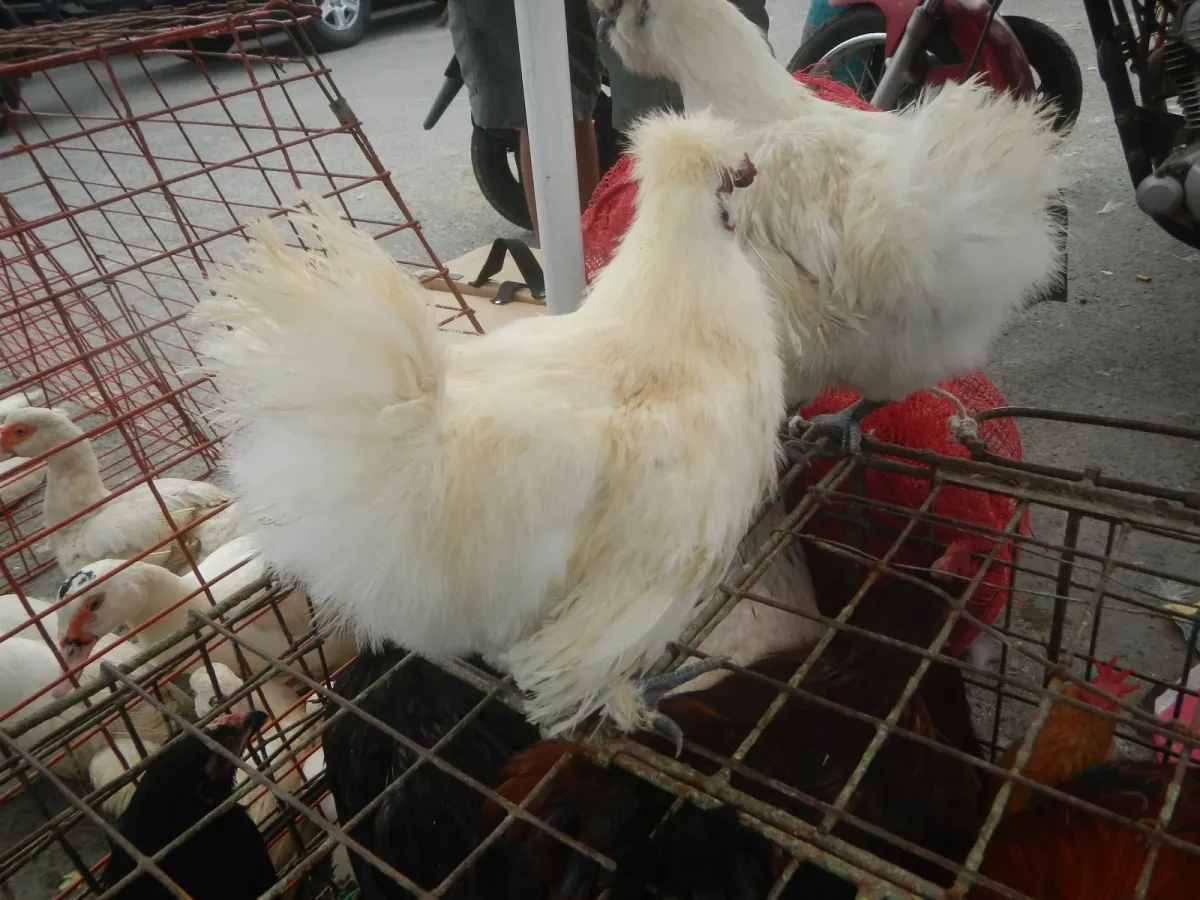
Silkie Chicken Breeders: Beginner's Guide
A beginner's guide to choosing silkie chicken breeders, with questions on housing, health paperwork, and NPIP status, rather than a ranked vendor list.
Start with the breeder’s habits, not with a cute photograph
Silkie chicken breeders sell a distinctive bird: a small, fluffy fowl that many families want for the garden rather than for a production house. This is a beginner’s guide to choosing a breeder, not a ranked directory, not a price list, and not a veterinary manual. A pretty crest in a photo does not tell you how the flock is kept, whether paperwork exists, or whether the seller will still answer the phone after you get home.
Treat the purchase like any other poultry purchase, then add questions that belong to this breed’s size and feathering. Silkies are typically in the bantam size range. Maryland Extension’s housing table, in Housing Requirements, gives bantams 1 square foot inside the coop and 4 square feet in an outside run as a minimum. Delaware Extension’s more general backyard range, in its chicken housing fact sheet, is 2 to 3 square feet inside and 8 to 10 in the run. When in doubt, give more room than the smallest number, and do not use a “standard hen” capacity chart for a mixed flock that includes larger birds.
The house itself still has to be dry, ventilated, and lockable. Our chicken pen and coop checklist is the right companion to this guide, and chicken coop ideas can help you match a small, low-flying bird to a layout you can actually clean.
Ask for official health paperwork, then for ordinary husbandry
The most useful formal question is whether the flock participates in the National Poultry Improvement Plan. USDA APHIS explains NPIP as a voluntary program for participating flocks, on its NPIP reference page. The program site is poultryimprovement.org. Ask for a participant number or current documents, and understand the limit: NPIP is not a blanket health guarantee, and it is not a breed-quality score. It is still better than “we never have problems.”
Then ask ordinary questions that paperwork cannot answer. Where do new birds come from? Are newcomers kept apart? What do the pens look like in wet weather? Silkies have abundant head and foot feathering, so a chronically muddy yard is a practical problem, not an aesthetic one. You do not need a medical lecture to prefer a dry, well-drained run and a house that does not drip onto bedding. If a bird already looks unwell, do not complete the sale as a favor; speak to a veterinarian.
A good breeder can tell you, in plain language, how they brood chicks, how they mark or describe sex when they sell, and what they will do if a bird is not as described. A vague “hatchery mix” is not the same as a breeder who can talk about their own pens. Neither is automatically dishonest, but they are different products. If you are also being offered a coop in the same deal, use the coop and chickens for sale checklist so the housing is not an afterthought.
What to look at when you visit, or when birds will be shipped
If you can visit, look at waterers, bedding, and whether birds can get away from a wet spot. Look at how the seller handles a bird: calmly, or as an afterthought. Look at whether different ages and sources are mixed in one small box. Take notes rather than relying on memory once you are back in the car.
If birds will be shipped, ask which carrier, who is responsible if a box is delayed, and what the packing looks like in hot or cold weather. This article will not invent a safe temperature range or a shipping insurance claim. If the seller cannot describe the packing, wait for a local pickup or another breeder.
Do not expect a backyard beginner to need a show-quality bird. You do need honest labeling. If you want birds for a child’s garden flock, say so, and ask for a temperament the seller has actually seen, not a breed myth. If you want birds that match a written standard, ask how the seller evaluates that, and whether they show or merely sell the name “Silkie.”
Local rules still apply. A municipality that limits flock size, or bans roosters, does not make an exception for a fluffy breed. Confirm that before you pay a deposit.
A table of questions worth asking a Silkie breeder
| Topic | A useful question | A thin answer |
|---|---|---|
| Official paperwork | “Do you participate in NPIP, and may I see current documents or a participant number?” | “Everyone around here is clean.” |
| Housing | “May I see the pen, including the dry area and the night house?” | A single staged photo of a bird on a porch chair |
| New stock | “Where did these birds or hatching eggs come from, and were they kept apart at first?” | “We add birds whenever we find them.” |
| Sex and age | “How do you determine sex at the age you are selling, and what happens if I was sold the wrong sex?” | “They’re all pullets, probably.” |
| Weather and feathering | “How do you keep bedding and foot feathering dry in a wet week?” | “Silkies do fine anywhere.” |
| After the sale | “How can I reach you tomorrow if the description was wrong?” | A disconnected inbox, or cash-only silence |
If most of the right-hand column appears in one conversation, you are not being picky. You are being a beginner with a spine.
A beginner’s checklist before you place a deposit
- Confirm you may keep the birds at your address, including any rooster rules.
- Measure your own coop and run against bantam and general extension space figures, and give extra room if you also keep larger hens.
- Ask about NPIP or other official paperwork, and write down what you were shown.
- See the actual housing, or get recent, unstaged photos of the pens, not only of the crests.
- Agree in writing on number, age, sex as known, pickup or shipping terms, and what happens if a description is wrong.
- Prepare a dry, secure, separate place for new birds, with their own feeders and waterers.
- Do not buy a bird that already looks ill in order to “save it” from a listing. Get veterinary advice.
A careful first order is slower than an impulse click, and kinder to the birds you already have.
Questions beginners ask about Silkie breeders
Do I need a specialist Silkie breeder, or will any chicken seller do?
You need a seller who can tell the truth about source, housing, and sex, and who keeps birds in dry, secure pens. A specialist may know the breed’s housing quirks better. A careful mixed-poultry keeper with paperwork can be a better source than a specialist with no records. Judge the habits, not the logo.
Are Silkies exempt from ordinary space and predator rules because they are small?
No. Maryland’s bantam figures are starting minima, not a reason to shrink a run to a crate. Silkies also do not fly out of trouble the way some lighter breeds might, which makes a secure run and a lockable night house more important, not less.
What paperwork is reasonable to request?
NPIP participation documents or a participant number, plus a clear sales note with age, sex as known, and source, are reasonable. If the seller has no official paperwork, that is a fact you should weigh, not an insult. This guide will not invent certificates that do not exist.
Can I add new Silkies to my existing flock the day I get home?
That is a biosecurity risk, not a welcome party. Official poultry biosecurity advice centers on not mixing untested birds and equipment. Set up a separate pen first. For any health concern about a specific bird, speak to a veterinarian rather than to a breed group thread.